AI has become a regular topic of conversation for us at SecondNature. Over the past few months, it’s come up more often with clients and participants, and it’s now rare to run a workshop without someone asking where AI fits into the presentation-preparation process.
And that’s hardly surprising. As AI becomes embedded in more of the tools we use every day, people are naturally experimenting with how it can help them prepare presentations more quickly and effectively.
There’s plenty to be excited about. Used well, AI can save time, challenge your thinking and become a genuinely useful partner in the preparation process. But used without enough thought, it can make it remarkably easy to produce something polished and professional-looking, yet ultimately wrong for the audience, or even wrong altogether.
So rather than asking whether AI is good or bad for presentations, we think a more useful question is: where does it genuinely add value, and where does the human presenter still need to take the lead?
That’s what we’ll explore in this blog.
The Presentation Shortcut That’s Almost Too Tempting
Whether we realise it or not, AI has become part of the way many of us work. AI tools are integrated into most of the applications we use daily: search engines, meeting note-taking tools, slide-writing tools, and workplace software. It’s a basic part of the workday, whether we seek it out or barely notice it. And when time is short, it’s tempting to let it do some of the heavy lifting for us.
Let’s imagine you have a presentation to the leadership team in two days. You’ve made some notes, have an old deck with pertinent background information, and done some number crunching. So, you upload it all and ask AI, “Can you turn this into a 20-minute presentation?”
In seconds, you have a polished structure, headings, content, and maybe even the slides themselves.
Amazing!
But is it actually a good presentation? Does it lead the audience where they need to go? Has it addressed their concerns? Is it persuasive?
And therein lies the problem: creating a presentation has become remarkably easy, but creating an effective one hasn’t.
AI hasn’t solved the presentation problem. It’s solved the slide-production problem. They’re not the same thing.
Always Start with Human Thinking

If you are preparing an important meeting or presentation, the first question you need to ask yourself, and before you ask AI anything, is: What am I trying to achieve?
A useful reality check is to address these questions before even thinking about the content:
- Who is the audience?
- What do they already know/think?
- What do you want them to Think, Feel or Do as a result of the presentation?
- What evidence will persuade them?
- Will they prefer big-picture/strategic information or more detailed/technical information?
- What questions or concerns do you need to pre-empt?
And remember, the answer lies not in what you want to say, but in what your audience needs to hear.
At SecondNature, we use our Presentation Mapper™ framework to help presenters work through the essential thinking before they start building slides. It’s only when you’ve done the critical thinking and thought about the journey you want to take the audience on that AI should then be used. And in fact, AI is far more useful at this stage because you are asking it to support a clear strategy rather than create one for you. The Presentation Mapper™ tool doesn’t compete with AI; it gives AI a better brief.
That completely changes the role of AI. Instead of asking it to decide what your presentation should say, you can use it to test, challenge and develop the thinking you’ve already done.
Do the thinking first. Then let AI help you to do something with it.
Use AI to Challenge Your Thinking, Not Supply It
One of the smartest ways to use AI is not to ask it for answers, but to ask it to challenge yours. Once you’ve done the initial thinking, AI can become a useful sounding board, helping you uncover assumptions, objections or gaps you may not have considered.
Some questions you might ask AI to test how clear, easy to follow, or persuasive your presentation really is could include
- “Where are the gaps in the logic flow of this presentation?”
- What objections might this audience have that I haven’t considered?”
- “What is the strongest argument against this recommendation?”
- “Where is my thinking the weakest?”
- “Could this information be communicated more clearly through a diagram, chart or visual rather than another slide full of text?”
- “What points here need stronger or more robust evidence?
- “What important question does this presentation fail to answer?”
- “What assumptions am I making that my audience may not share?”
- “What might stop them from saying yes?”

Now AI isn’t doing the thinking for you. It’s giving you more to think about. Once you’ve tested your ideas, you can decide what to keep, where you might need a different approach and which arguments need strengthening. Crucially, those decisions remain yours. You know the audience, the context and the outcome you’re trying to achieve.
AI can also help when you want to explore different ways to approach something. You might ask it for three alternative ways to structure your argument, ways to simplify complex data or how different members of your audience might respond to the same recommendation.
Again, the value lies in the options AI gives you, not in allowing it to make the decision. It can suggest different routes, but you decide which one is most persuasive, appropriate and authentic for your audience.
You’re not asking AI for answers; you’re asking it to strengthen your answers.
Use AI to Make the Presentation Simpler, Not More Impressive
When it comes to writing the content, it’s tempting to use AI to generate more: more copy, more research, more examples, more slides.
But the most persuasive presentations often need less. A well-structured argument should lead the audience seamlessly towards the final conclusion. If a slide or key point doesn’t support that journey, question whether it should be there.
Here you can use AI to ask:
- “Where am I repeating myself?”
- “Which three points matter most?”
- “What jargon could I remove?”
- “How could I explain this to someone who doesn’t work in my field”
- “Which slides aren’t contributing to my central argument?
The presenter’s job isn’t to share everything they know, but to give the audience what they need to feel informed, appreciate something differently, or make a decision.
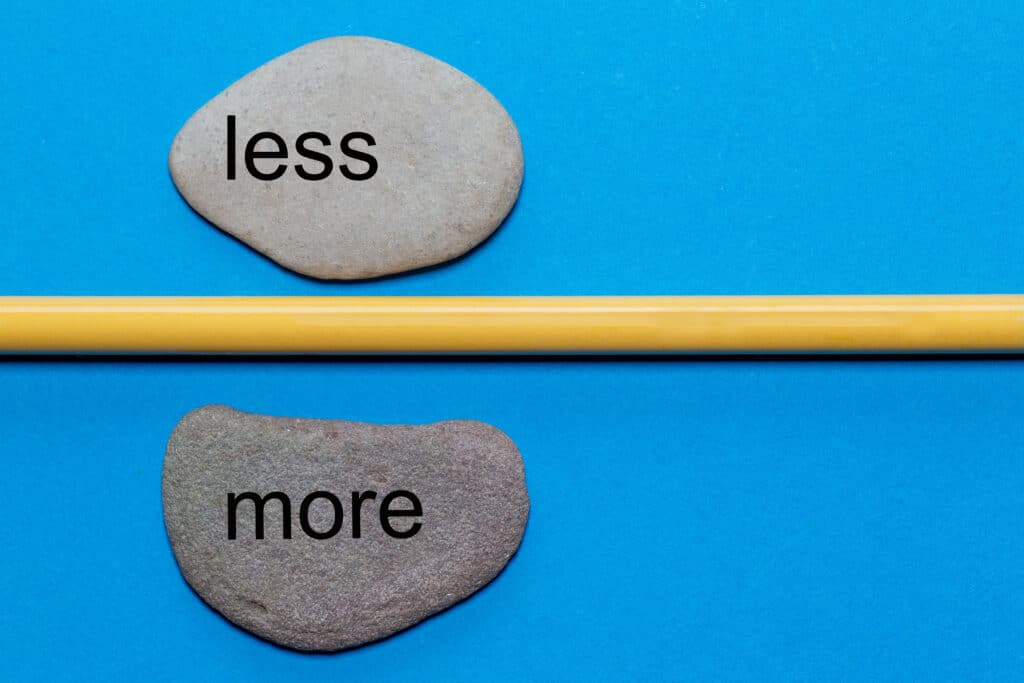
AI makes adding content easy. A good presenter still knows what to take away.
Turn AI Into Your Toughest Audience
Rehearsal is when a presentation moves from looking good on paper to being tested in practice.
So, once the thinking is done and your presentation has taken shape, AI can play another useful role: helping you prepare for the people who will eventually be sitting in front of you.
While AI can’t tell you how confidently you’ll come across in the room, it can help you recreate some of the pressure and unpredictability you might face. Instead of simply rehearsing what you want to say, you can use AI to test how well you’re prepared for what your audience might say back.
Depending on your audience, you can ask AI to role-play, e.g.:
- “Act as a sceptical CFO and ask me the five questions you would most want answered before approving this proposal.”
- “You’re a time-poor CEO. What would you challenge or want me to get to more quickly?”
- “Ask me one difficult question at a time about this recommendation and challenge my answer if it isn’t convincing.
It can identify potential objections, ask tough questions, and challenge assumptions.
But while AI can generate the difficult questions, it can’t teach you how to answer them in the room.
That requires listening, judgement, confidence and the ability to adapt.
Know When to Put AI Away

While AI can be a useful tool during the thinking, structuring, and content-creation phases of the presentation journey, it can substitute less for capability the closer you get to delivery day. Its usefulness diminishes the closer you get to the human moment: the actual presentation itself.
Eventually you have to close the laptop, stand up and communicate with confidence.
AI can’t notice a sceptical expression and change direction.
It can’t decide whether to abandon three slides because the meeting is running late. It can’t establish trust with a nervous client. And it can’t respond authentically when somebody challenges your recommendation.
AI can help you prepare for uncertainty, but it can’t remove it. No amount of prompting can replicate the judgement required when the conversation takes an unexpected turn, the room’s atmosphere shifts, or an audience reacts differently than you expected.
This is why rehearsal matters. At some point, you need to stop refining the content and become comfortable enough with your message to deliver it naturally, adapt when necessary, and stay focused on the people in front of you rather than the presentation you prepared.
The goal is to use AI to strengthen your preparation, not replace the skills you need to deliver.
AI Can Sound Convincing and Still Be Wrong

AI can produce remarkably polished and authoritative-sounding content, but that doesn’t necessarily make it accurate. If you use it to find statistics, research, quotations, or supporting evidence, always go back to the original source and verify the information yourself. If something doesn’t look or sound right, don’t use it until you’ve verified it.
The same caution applies to what you give AI in the first place. Before uploading internal reports, client information, financial data or other commercially sensitive material, make sure you understand your organisation’s AI policy and how the platform you’re using handles that information. Different tools have different approaches to privacy, data storage, and using content to improve their models.
And remember that inaccurate information isn’t the only risk. AI-generated images and content can reflect bias, overlook important context, or produce language and ideas that simply aren’t appropriate for your organisation or audience, and could also create copyright or intellectual property issues.
So, use AI to research, question, explore and refine, but keep responsibility for what ultimately makes it into your presentation.
And importantly, what does make it in needs to reflect your authentic voice.
AI Raises the Floor. Your Skills Raise the Ceiling.
AI will become an increasingly familiar part of presentation preparation, and that’s no bad thing. Used responsibly and intelligently, it can save time, challenge assumptions, strengthen an argument, simplify complex information and help you prepare for difficult questions.
But none of that changes what ultimately makes a presentation effective.
You still need to understand your audience. You still need to decide what you want them to think, feel or do. You still need to exercise judgement over what to include and what to leave out. And when the moment comes, you still need to stand before others and communicate your ideas with clarity, confidence, and conviction.
Always start with human thinking, use AI to challenge and refine your arguments, and then use human judgement to decide what is relevant.
In fact, as AI makes it easier for everyone to produce competent content and professional-looking slides, those human capabilities become more valuable, not less: judgement, persuasion, authenticity, adaptability and audience connection.
The difference between an average presentation and an exceptional one won’t be who has access to the best AI. It will be who knows how to use it without letting it replace their own critical thinking, experience, judgement, and voice.
AI can help you prepare a better presentation. But only you can deliver it.
The technology will keep evolving. But human skills – your ability to communicate, persuade, and connect with an audience – will continue to set you apart. And those are skills worth developing.
At SecondNature, our tailored presentation skills training and coaching programmes help you develop the human skills that make presentations genuinely effective, from structuring persuasive arguments to delivering them with confidence, authenticity and impact.
Explore SecondNature’s programmes and discover how we can help you become a more confident, compelling presenter.
At SecondNature, we’re known as the Business Presentation Skills Experts, training and coaching thousands of people in A- Z of global and local organisations. Whether it’s a team meeting or a high-stakes presentation, we help people become the confident, compelling, and memorable presenters they want to be. We don’t just train. We transform. View our presentation skills training and coaching reviews to check out what they say about our programmes. We offer a wide range of customised corporate training solutions, in-person and online, tailored to your specific business needs. We’d love to hear from you, so get in touch.