

Whether you’re preparing your first talk or you’ve presented dozens of times, nerves before a presentation are completely normal, and believe it or not, more common than you might think.
Recent data suggests that around three-quarters of people experience some level of anxiety about public speaking, and many will feel nervous even when they know their content well. In other research, around 60–65 % of adults report having experienced public-speaking anxiety, underscoring just how pervasive this experience is across different ages and professional backgrounds.
This fear isn’t just “butterflies in the stomach.” Being observed, evaluated, or simply noticed by others can activate our brain’s stress responses, something humans have evolved to do long before boardrooms and Teams calls existed. That biological wiring can make even experienced presenters feel tension, self-doubt, or concern about how they’re being perceived. Left unchecked, anxiety can interfere with your confidence, clarity, and connection with your audience.
That said, nerves don’t have to undermine you or your delivery. With the right strategies, you can manage those feelings effectively and deliver with poise and assurance.
In this blog, we’ll explore practical, science-backed techniques – from preparation routines to mindset shifts – that can help you understand and work with your nerves so you step into your next presentation feeling composed and confident.
What causes stage fright before presentations?
In simple terms, stage fright is your brain’s response to perceived pressure, risk, or judgment. When you stand up to present, your brain doesn’t neatly separate ‘professional presentation’ from other situations where being evaluated might matter. It reads the room, senses uncertainty or scrutiny, and flips a switch designed to keep you safe.
That switch is the fight-or-flight response.
When your brain thinks you might be under threat, whether that threat is physical danger or the fear of looking foolish, it releases stress hormones such as adrenaline and cortisol. Your heart rate also increases. Your breathing becomes faster and shallower. Your muscles tense. Your focus narrows. All of which is useful if you need to run away from danger. But it’s less helpful when you’re trying to explain a strategy slide to a room full of colleagues or stakeholders.
This is why stage fright can feel so physical: shaky hands, a racing heart, a dry mouth, or that ‘mind going blank’ moment just as you start speaking. None of this means you’re bad at presenting. It means your nervous system is doing exactly what it was designed to do under pressure.
It’s also worth normalising something many people quietly assume they’re alone in; even highly experienced presenters feel nervous. The difference is not that confident speakers don’t get nervous; it’s that they’ve learned how to manage them, interpret them differently, and stop them from running the show.

Actionable Tip: Practical mindset shift. One simple but powerful technique is to reframe nerves as excitement.
Physiologically, anxiety and excitement feel very similar: elevated heart rate, heightened alertness, and more energy in your system. Instead of telling yourself, “I’m nervous, this is bad,” try saying, “I’m energised and ready.” You’re not trying to pretend the feeling isn’t there; you’re changing the story you tell yourself about what it means.
That small shift can reduce the sense of threat, calm the stress response, and help you use that extra energy to be more focused and to speak with more conviction.
Prepare Thoroughly to Reduce Uncertainty
One of the biggest drivers of stage fright is uncertainty. Not knowing exactly what you’re going to say, how it will land, or what might go wrong, gives your brain plenty of space to fill in worst-case scenarios. The most reliable way to reduce that uncertainty is simple: prepare well and practise deliberately.
Start by rehearsing your presentation until you feel genuinely comfortable with the material, not word-perfect, but clear on your structure, your key messages, and how you’ll move from one point to the next. You want to reach the point where you’re no longer thinking, “What comes next?” and can focus instead on your audience and your delivery.
A useful approach here is record, review, and refine. Record yourself delivering the presentation (on your phone is fine). Watch it back and review with a practical, not critical, eye. What’s clear? Where do you ramble? Where do you sound strongest? Then refine and repeat. This process quickly builds familiarity and confidence because you’re turning vague worries into specific, fixable improvements.
It also helps to reduce unknowns around the environment. If you can, familiarise yourself with:
- Who will be in the room and what they care about
- The venue or virtual setup
- The technology you’ll be using
Finally, pay particular attention to your opening. A strong, well-rehearsed start does two things: it sets the tone for your audience, and it helps you settle into your rhythm. Once you’ve delivered your first minute confidently, your nerves will usually drop sharply.
Use Breathing Techniques to Calm Your Nerves
When nerves kick in, your breathing is often one of the first things to change, becoming faster and shallower. Deep, controlled breathing helps regulate your heart rate and signals to your nervous system that you’re safe, which in turn reduces the physical intensity of anxiety.
One simple method to try is the 4-7-8 technique:
- Inhale for 4 seconds
- Hold for 7 seconds
- Exhale slowly for 8 seconds
A few rounds of this can noticeably calm your body before you stand up to speak.

You can make this even more effective by combining breathing with mindfulness; gently bringing your attention back to your breath and the present moment, rather than letting it spiral into “what if” thoughts about the presentation.
Other useful breathing exercises include:
- Box breathing (4-4-4-4): inhale, hold, exhale, hold, each for 4 seconds.
- Diaphragmatic breathing: breathing deeply into your belly rather than your chest to promote relaxation.
These are small tools, but used consistently, they can make a big difference to how steady and in control you feel.
Visualise Success to Build Confidence
Your brain doesn’t only learn from doing, it also learns from imagining.
Visualisation uses mental imagery to help you rehearse success before you even step into the room.
Spend a few minutes picturing yourself delivering the presentation clearly and calmly. Imagine walking in, starting confidently, explaining your ideas, and seeing your audience engaged and responsive. The goal isn’t to pretend nothing could go wrong, but to train your focus on positive, realistic outcomes, rather than defaulting to mistakes and mishaps.
This kind of mental rehearsal helps your brain build familiarity and confidence, making the real situation feel less threatening when it arrives.
A common trap is doing the opposite: repeatedly replaying worst-case scenarios, forgetting your words, being challenged, or losing your place. The more you rehearse those in your head, the more anxious you’re likely to feel. Instead, deliberately practise visualising yourself doing things well and handling the situation competently.
Use Positive Self-Talk to Overcome Doubt

What you say to yourself before a presentation has a powerful effect on how you feel when you start speaking.
If your inner voice is saying things like, “I’m going to mess this up,” or “Everyone will notice I’m nervous,” your confidence will drop before you’ve even begun. The aim isn’t to become unrealistically positive; it’s to be constructive and accurate.
Try replacing unhelpful thoughts with more grounded ones, such as:
- “I’m prepared, and I know my material.”
- “What I have to share is relevant and important.”
- “I don’t need to be perfect to be effective.”
- “The audience wants me to do well.”
- “I’ve handled situations like this before.”
It also helps to remind yourself of past successes, even small ones. Your track record is usually much better than your nerves suggest.
In UK workplaces especially, audiences tend to value clarity, authenticity and relatability more than polished perfection. You don’t need to deliver a flawless performance – you need to connect, explain, and be understood. So let go of the idea of trying to be perfect!
Manage Physical Symptoms of Stage Fright
Stage fright often shows up physically. As mentioned before, shaky hands, a dry mouth, sweating, or muscle tension. These symptoms can be distracting, but they’re also manageable with a few practical adjustments.
Some simple tactics include:
- Hold a pen or clicker to give your hands something to do.
- Sip water beforehand (and keep some nearby) to help with a dry mouth.
- Wear breathable, comfortable clothing so you’re not adding physical discomfort to the mix.
- Use progressive muscle relaxation, gently tensing and releasing different muscle groups to reduce overall tension
Actionable tip: Body scanning. Just before you present, do a quick body scan. Starting at the top of your head, work down through your body, noticing where you’re holding tension. Consciously relax your jaw, drop your shoulders, loosen your hands, and soften your posture. This takes less than a minute and can noticeably reduce that ‘wired’ feeling.
Channel Nervous Energy into Enthusiasm
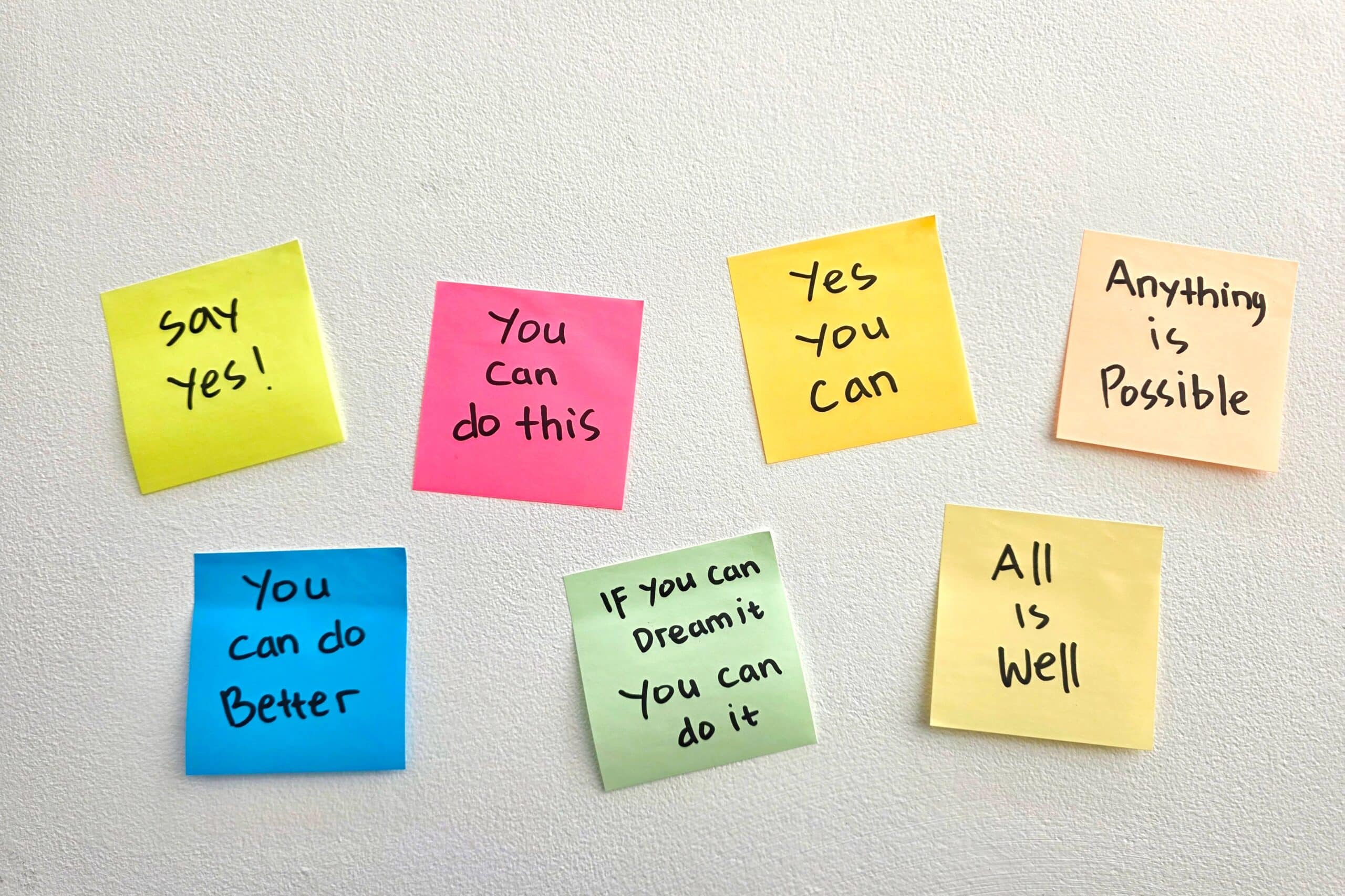
We know that the physical sensations of anxiety and excitement are very similar. Both come with increased energy, alertness, and intensity. The difference is how you interpret and use that energy.
Instead of trying to suppress nervous energy, channel it into your delivery.
Move with purpose. Use gestures to emphasise key points. Let some energy into your voice. This doesn’t mean pacing nervously or fidgeting; it means using movement, expression and vocal tone to support what you’re saying and keep your audience engaged.
Simple ways to channel nervous energy include:
- Smiling to relax your face and signal warmth
- Using light, appropriate humour to build rapport
- Harnessing gestures to underline takeaway messages
- Standing up (if you’ve been sitting) to refer to elements on the screen
- Moving to different parts of the room or stage at natural transitions in your presentation
When you do this, that nervous energy stops feeling like something to fight and starts becoming the fuel for engagement and momentum.
Overcome Stage Fright with the Right Strategies
Stage fright is a natural response to pressure and visibility, but it doesn’t have to hold you back. Nerves are not a sign that you’re bad at presenting; they’re a sign that you care and that you’re human.
The difference is what you do with them.
By preparing thoroughly, calming your nervous system, and using simple, proven techniques to manage your mindset and energy, you can take control of your nerves instead of letting them control you. Over time, these approaches don’t just make presentations easier. They make them more consistent and more effective, and you are more confident and relaxed.
And with regular practise, managing stage fright really does start to feel like second nature.
Ready to build lasting presentation confidence?
Explore SecondNature UK’s tailored training programmes to build confidence, sharpen your message, and master your presentation skills, whether you’re presenting to clients, stakeholders, senior leaders or your colleagues.
At SecondNature, we’re known as the Business Presentation Skills Experts, training and coaching thousands of people in an A-Z of global and local organisations. Whether it’s a team meeting or a high-stakes presentation, we help people become the confident, compelling, and memorable presenters they want to be. We don’t just train. We transform.
View our presentation skills training and coaching reviews to check out what they say about our programmes. We have a wide range of customised corporate training solutions, both in-person and online, to choose from, each of which is tailored to your specific business needs.