

It probably won’t surprise you that research shows that the top trending ‘most valued critical business skill’ right now is adaptability. For companies, adaptability is essential to meet the challenges of constantly evolving technologies, consumer expectations, and fast-changing market trends. For employees, adaptability means being able to adjust quickly to changes within the organisation, rapidly learn new skills, and handle unexpected challenges while maintaining productivity and contributing to achieving organisational goals.
And the best way to drive and encourage adaptability throughout the workforce is through a culture of continuous learning where employee development is not a one-time training programme or event. Instead, it’s an ongoing process of continuous support, empowerment, and the acquisition of new skills which benefit both the employee and the company. This type of culture recognises and embraces corporate training as a critical component of business and personal success and leads to increased employee engagement, loyalty, talent retention, and performance.
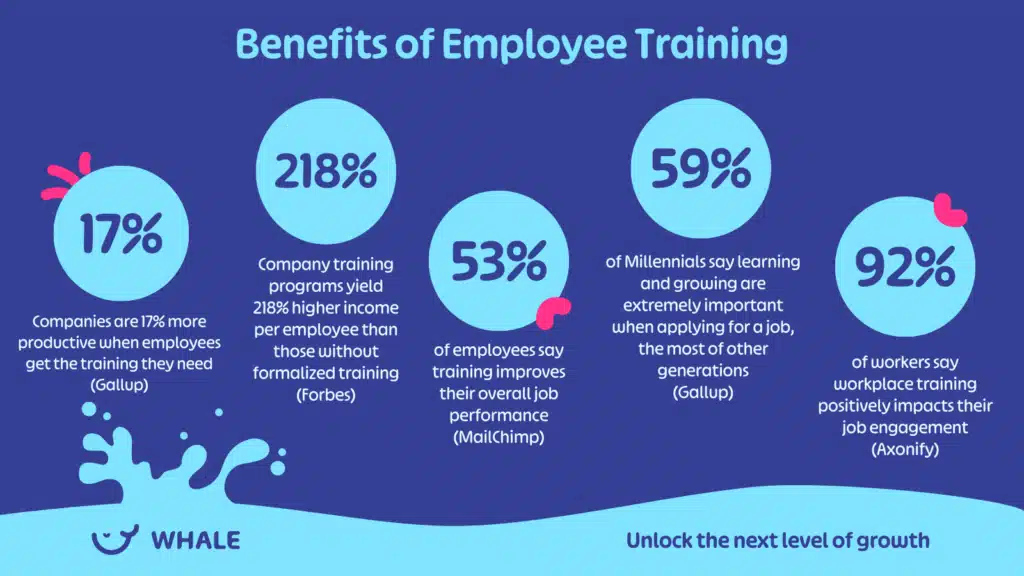
And there’s plenty of evidence that shows that companies that invest in continuous learning reap the benefits of increased productivity and a more satisfied workforce.
So, with the understanding that L&D budgets are under constant pressure, in this blog we are going to explore the benefits of building a culture of continuous learning and identify ways that the benefits can be measured.
Why is continuous learning important?
As we’ve seen, a strong learning environment results in significant benefits for both the employee and the company. A culture of continuous learning is not only vital for employee satisfaction, engagement and productivity, but it’s an important factor for attracting top talent. Furthermore, having a workforce that feels valued and invested in is more creative and innovative – and that can be key for long-term growth.
Continuous learning also allows companies to develop and ‘home grow’ their own future leaders and create a sustainable pipeline of talent. Preparing employees to take on new and additional responsibilities is the best way to future-proof the workforce and leads to greater resilience and improved problem-solving. In short, a culture of continuous learning gives organisations a competitive edge.

Finally, according to the LinkedIn 2024 Workforce Learning Report companies with strong learning cultures have a 30% to 50% higher talent retention rate, and internal mobility increases by up to 23%. Both these factors of course lead to less staff turnover and a significant reduction in the costs involved in hiring new staff.
Building a culture of continuous learning
The key to any successful learning culture is having the support and participation of the leadership team. They set the tone for the whole programme and demonstrate that learning is beneficial for everyone. When leaders prioritise employee growth and development it builds trust, increases morale, and helps to build a culture of constant innovation.
Importantly, having leaders involved in learning initiatives helps to ensure that any and all training directly contributes to organisational goals and strategic objectives. They act as mentors and role models for the workforce and show that everyone can benefit and grow from a culture of continuous learning.
Developing personalised learning programmes with each employee will ensure that any training aligns with their own career goals, as well as organisational goals, to maintain their engagement and enthusiasm for the programme. And gamification or regular incentives also help to make learning fun. Continuous learning also requires a system of continuous feedback so that progress can be measured and rewarded.
However, any learning programme also needs to be adaptable and flexible to meet the challenges of the new hybrid workforce. Using a mix of formats in addition to in-person training – such as online self-completion modules, micro-learning elements, webinars, and podcasts, together with internal mentoring and on-the-job learning – will support employees to choose a learning approach that works best for them. This is particularly important for employees who work remotely. Ensuring learning accessibility will help to establish learning as an integral and inclusive part of the organisational culture.
Why communication and business presentation skills training should be part of every learning programme

Developing effective ‘soft skills,’ (or what we call Professional Skills) like communication and business presentation skills training, is key to both organisational and individual success, regardless of industry sector or business goals, and should be regarded as a valuable component of any corporate learning programme. Here’s why they are important:
- Effective communication skills help leaders and employees to confidently and clearly convey their ideas, making meetings more productive and engaging. Importantly, it also reduces the chances of misunderstanding or miscommunication.
- Public speaking, even among peers, can be one of the most stressful aspects of any role. Formal training gives employees a range of techniques to overcome nerves and boost confidence so that they can share their ideas openly in different business settings. It is also a key skill for both personal and professional growth.
- Training provides people with the tools and techniques to adapt messages to different audiences, simplify complex ideas and maintain audience engagement. This leads to more persuasive and engaging meetings and presentations with positive outcomes.
- Having a workforce of effective communicators results in more consistent corporate messaging and enhances the brand experience for key stakeholders.
- Collaboration and innovation improve within and across teams as employees become more confident in presenting new ideas.
- Employees who have the techniques to communicate effectively across hybrid and digital meeting platforms, as well as in-person situations, will keep virtual audiences engaged and ensure all meetings are productive.
Including presentation skills training in corporate learning programmes will create a workforce that is better prepared, more collaborative, more productive, more persuasive and importantly, more adaptable.
Measuring the success of your learning culture

Establishing and setting relevant KPIs in advance of any training or coaching is important for evaluating the effectiveness of any learning programme. These can include employee engagement and satisfaction levels, skill improvement measurement and ROI metrics for increased productivity, win rates and revenue. Providing feedback and encouragement on a regular basis is also critical for the employee so that they remain motivated and don’t slip into any old bad habits.
For decades L&D professionals have used the Kirkpatrick Four-Level Model – Reaction, Learning, Behaviour and Results – to measure outcomes.
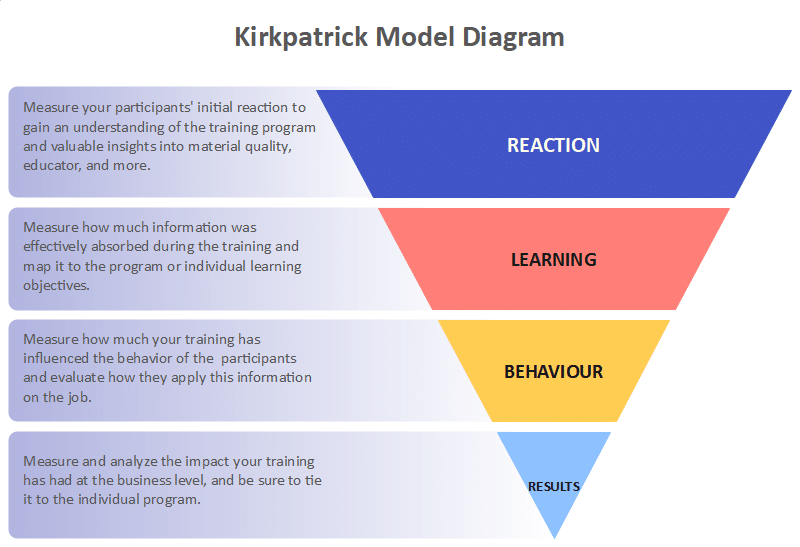
But recently, some talent experts have suggested that the process should be inverted and that you should start with the results you want to see, then work backwards to identify how behaviour would need to change to generate these results and therefore what learning is required.
Conducting employee assessments, pre and post-training, is also a good way to track progress. How well are they applying their newly acquired skills on a day-to-day basis? Again, progress should be measured by relevant KPIs. Regular self-reported confidence and skill level surveys to monitor employee outcomes can also provide valuable information on whether the skills are being applied and used on a long-term basis.
Establishing ROI measures can be more difficult when it comes to professional skills and we are frequently asked for feedback on this topic. Attributing cost savings, increased productivity, or revenue growth that occurs as a direct result of more effective communications is not always straightforward. But one of the most beneficial performance outcomes that we hear about from our clients is a significant improvement in internal communication which directly leads to greater efficiency. We coach people on how to present ideas, updates, and outcomes in a way that is clear and understandable to their colleagues. This also leads to better collaboration and cohesion between teams. Clients also tell us that there is evidence of these newly acquired skills cascading down to other members of the team who are in turn motivated by their leaders.
Using a combination of regular evaluation methods allows for a comprehensive view of the programme’s effectiveness, capturing both short-term gains and long-term impacts.

We appreciate that creating a continuous learning culture takes time and investment and that it’s important to start the process with training that will deliver the greatest results right away. We believe that communication and presentation skills training is the best place to start. Participants are equipped with new skills and a greater level of confidence that they can put into practise right away. We also mentor and support each person for 90 days post-training so that these skills become second nature.
If professional in-person or online coaching is not an option straight away then why not use our extensive library of blogs covering almost every aspect of presenting, from how to use storytelling techniques to humanise the narrative, to how to present successfully as a team, to managing nerves for conference presentations, right through to a whole host of expert delivery techniques. By establishing a regular training calendar, appointing a team leader, and dealing with one subject blog at a time, employees will have the opportunity to learn together and practise these techniques in a safe and supportive space.
Whichever way you begin the process – implementing no-cost internal learning forums or professional coaching programmes – the most important thing is to start.
How We Can Help
If you’d like to learn more about why boosting your employees’ communication and presentation skills is a key element to establishing a culture of continuous learning, then why not get in touch.
For nearly 20 years we have been known as the Business Presentation Skills Experts, training and coaching thousands of people in an A-Z of global and local organisations. View our presentation skills training and coaching reviews to check out what they say about our programmes.
We have a wide range of customised corporate training solutions, both in-person and online to choose from, each of which can be tailored to your specific business needs.